 Share
 Post
 Email
 Share
 Share
 Share


Infineon Oktoberfest 2026
Technical Training and Customer Appreciation Reception
September 18
Cancelling your registration will remove your access to the event. If you proceed, you will no longer be able to participate or access event-related materials.
Deleting your account will remove your access to the event.
Need Technical Assistance? ✉ tech@vfairs.com
Share
Post
Email
Share
Share
Share
Infineon Oktoberfest 2026
Technical Training and Customer Appreciation Reception
September 18
Oktoberfest Technical Training and Customer Appreciation Reception
Join us on September 18 for a full day dedicated to the automotive industry, featuring high-impact technical training, live demonstrations, and an evening reception inspired by Oktoberfest.
Start the day with access to 20 technical training sessions and a keynote designed for automotive professionals. Topics span a wide range of relevant industry needs, including a new disruptive track led by experts in robotics and AI topics. Whether you're looking to deepen technical knowledge or explore emerging technologies, these sessions offer practical insights you can put to work right away.
Experience innovation in action throughout the day with live demonstrations during both the technical training and evening reception. See new ideas and technologies come to life and gain a firsthand look at solutions shaping the future of automotive.
After the training concludes, continue the conversation at our Oktoberfest-inspired evening reception which starts at 4:30 PM. Enjoy a relaxed atmosphere, networking with peers, and a memorable close to a day focused on learning, connection, and innovation.

Edge AI: The Next Computing Revolution
A look at the hardware innovations powering intelligent, energy-efficient devices at the extreme edge.
Robert J. Vlasic Dean of Engineering , The University of Michigan
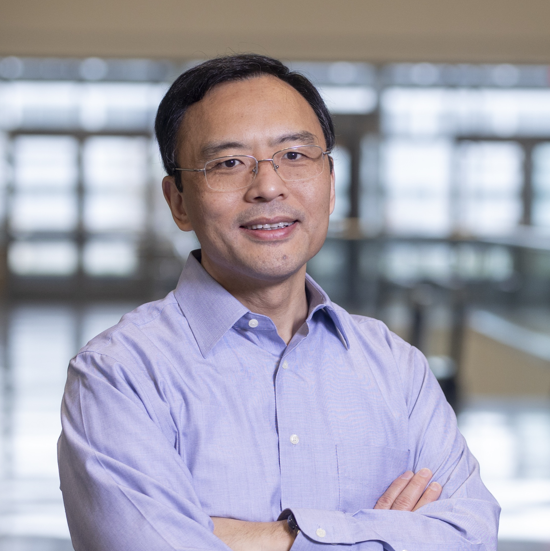
James R. Mellor Professor of Engineering at The University of Michigan, and Co-founder of MemryX Inc. and Crossbar Inc.
The rapid consumer demand for advanced driver-assistance sys...
The rapid consumer demand for advanced driver-assistance systems (ADAS), continuous over-the-air (OTA) updates, and connected mobility experiences has rendered traditional, decentralized vehicle topologies obsolete. This presentation, Evolving SDV and EE Architectures: Analyzing Past Challenges and Future Trends, provides a comprehensive examination of how Electric and Electronic (E/E) architectures are fundamentally changing to support modern software-driven vehicles. We will analyze the limitations of early decentralized networks, including wiring sprawl, high-latency communication, and the inability to seamlessly scale features after vehicle production and the unexpected cost of zonal architecture. We discuss how high-bandwidth Automotive Ethernet networks facilitate improved vehicle health monitoring and feature monetization. Finally, we will cover the integration of strict cybersecurity frameworks and fail-safe mechanisms necessary to protect these advanced central architectures.
Key takeaways:

Stefano (Steve) Spadoni
Application Marketing Manager Zone Controllers, Power Distribution, & 48V DC/DC, Infineon Technologies
Application Marketing Manager Zone Controllers, Power Distribution, & 48V DC/DC, Infineon Technologies
Stefano (Steve) Spadoni has a Bachelor of Science in Mechanical Engineering Degree - with a focus on Thermal Sciences - from Lawrence Technological University, Southfield, USA. He received his Master of Business Administration degree from University of Michigan in 2005. Upon completing his engineering studies, Stefano joined Alcoa Fujikura Limited as Product Engineer, responsible for the design of connectors and hard-wired electrical centers. Here he designed hybrid connectors and hard-wired electrical centers. This led to him designing electrical centers with stamped metal circuits and then printed circuit board designs. In 2006, Stefano transitioned to an engineering management position with Ford Motor Company working in the Electrical & Electronic System Engineering division and was involved with migration from electromechanical relays and fuse to solid state. He worked there for over 15 years, starting with power switching and circuit protection in an interior application then migrating the technology to exterior engine applications with higher temperatures and harsher environments. During Stefano’s tenure at Ford, he also led the research and advanced development of electrical distribution systems technologies focusing on the reduction of wire harness assembly costs. Over his 30+ year career, he has developed an understanding of global OEM’s needs and the feasibility of delivering from a supplier’s perspective. He is also at the forefront of the transition of emerging technologies, market trends and their impact on electrical distribution systems.
ADAS platforms are increasingly built around high-performanc...
ADAS platforms are increasingly built around high-performance SoCs, and system success depends on the correct integration of power, safety, memory, and connectivity components. This session provides a reference designer’s perspective on how ADAS SoC platforms are architected and how supporting components are selected and qualified. Drawing on Infineon experience across multiple SoC reference designs, the session explains key design trade-offs, selection criteria, and system partitioning choices that impact performance, safety, and scalability.
Key takeaways:

Jeff Arsenault
Application Manager ADAS domain and 77GHz RADAR Marketing, Infineon Technologies
Application Manager ADAS domain and 77GHz RADAR Marketing, Infineon Technologies
Jeff is a sales, engineering, and product management professional with over 30 years’ experience in automotive electronics and thermal management systems. Jeff has worked in automotive systems and product design and held sales and product management positions throughout his career. Currently, Jeff leads Infineon’s application marketing for ADAS / Autonomous driving and 77GHz Radar applications in the Americas.

Neal Manson
Senior Principal ADAS/AURIX Engineer, Infineon Technologies
Senior Principal ADAS/AURIX Engineer, Infineon Technologies
Neal has decades of Tier 1 and OEM experience in Automotive Engineering. Neal has supported Infineon's AURIX microcontrollers since 2013, specializing in Functional Safety and Embedded Software.
Modern vehicle architectures are moving toward zonal and sof...
Modern vehicle architectures are moving toward zonal and software defined designs, increasing the need to transport high bandwidth ADAS sensor data reliably and efficiently to centralized compute. Today 77GHz radar and camera data are often tightly processed at the sensor or carried over proprietary point to point links which limit scalability, interoperability, and access to richer information for advanced perception and fusion. Infineon is leading the move towards streaming 77GHz radar over a standardized, high speed Automotive Ethernet backbone and supporting proprietary network solutions as well. The presentation will explore the benefits of streaming radar and how Infineon can support jump-starting your development.
Key takeaways:

Farhan Bin Khalid
Lead Principal Radar Systems, Infineon Technologies
Lead Principal Radar Systems, Infineon Technologies
Farhan Bin Khalid is an ADAS and Radar Systems Expert and has been working at Infineon Technlogies AG since 2015. Previously he has been at the team of Automotive Systems. Since 2025, he has been at Systems Team at Technical Marketing, Radar Product Line. The work focuses on advanced signal processing & algorithms, system design, system architecture, and embedded software in the domain of automotive radar systems for advanced driver assistance systems (ADAS) and highly automated driving.
Jeff Arsenault
Application Manager ADAS domain and 77GHz RADAR Marketing, Infineon Technologies
Application Manager ADAS domain and 77GHz RADAR Marketing, Infineon Technologies
Jeff is a sales, engineering, and product management professional with over 30 years’ experience in automotive electronics and thermal management systems. Jeff has worked in automotive systems and product design and held sales and product management positions throughout his career. Currently, Jeff leads Infineon’s application marketing for ADAS / Autonomous driving and 77GHz Radar applications in the Americas.
A look at the hardware innovations powering intelligent, ene...
A look at the hardware innovations powering intelligent, energy-efficient devices at the extreme edge.

Dean Mingyan Liu
Robert J. Vlasic Dean of Engineering , The University of Michigan
Robert J. Vlasic Dean of Engineering , The University of Michigan
Mingyan Liu has served as the Robert J. Vlasic Dean of Engineering at the University of Michigan since May 15, 2026. She is the seventeenth dean of the University of Michigan College of Engineering.
Liu is also T. C. Chang Professor of Engineering and professor of electrical engineering and computer science at the University of Michigan.

Professor Wei Lu
James R. Mellor Professor of Engineering at The University of Michigan, and Co-founder of MemryX Inc. and Crossbar Inc.
James R. Mellor Professor of Engineering at The University of Michigan, and Co-founder of MemryX Inc. and Crossbar Inc.
Professor Wei Lu is the James R. Mellor Professor of Engineering, and Professor in Electrical Engineering and Computer Science at the University of Michigan. His research interest includes memory technologies such as 3D memories and RRAM/memristors, memory-centric computing architectures such as in-memory computing and neuromorphic computing systems, and physics- and biology-inspired AI models. He received his B.S. degree in 1996 from Tsinghua University and Ph.D. degree in 2003 from Rice University, followed by a postdoctoral research fellow position from 2003 to 2005 at Harvard University. He joined UM's faculty in 2005.
He is an IEEE Fellow, an AAAS Fellow, a recipient of the NSF CAREER Award, 2012 EECS Outstanding Achievement Award, 2014-15 Rexford E. Hall Innovation Excellence Award, 2016-2017 David E. Liddle Research Excellent Award, 2022 Distinguished University Innovator Award, and the 2022-23 Ted Kennedy Family Faculty Team Excellence Award. To date he has published over 200 journal and conference papers with over 50,000 citations and h-index of 95 (Google Scholar ). He is the founding Editor-in-Chief of npj Unconventional Computing. Beyond academic research, Prof. Lu holds 35 US patents and co-founded two startup companies, Crossbar Inc, a Silicon Valley semiconductor company developing next generation non-volatile memories, and MemryX Inc., an Ann Arbor-based semiconductor company developing highly efficient and scalable AI chips.
Join us as we explore a scalable approach to help design tea...
Join us as we explore a scalable approach to help design teams support everything from high-volume platforms to premium vehicle architectures. We’ll address key architecture pain points, through clear system partitioning, so critical functions are defined upfront and cleanly separated across the design. Introducing the Remote Control Protocol (RCP) that utilizes commands over Ethernet to an RCP gateway, to control Edge Nodes via UART/CAN, SPI, or I2C—enabling consistent control while simplifying updates across platforms.
Key takeaways:

James Baker
Staff System Application Engineer, Infineon Technologies
Staff System Application Engineer, Infineon Technologies
James Baker is a Systems Applications engineer, with ten years of experience working in the automotive industry. James ignited his passion for engineering as a competitor in FIRST Robotics. Going on to earn his bachelors in electrical engineering from Purdue University. James finds joy in writing, reading, and drawing for the world’s greatest game of Dungeons and Dragons.
As vehicles evolve toward software-defined architectures, ne...
As vehicles evolve toward software-defined architectures, network payloads are becoming increasingly large, creating new opportunities to optimize bandwidth, power, and system cost. IEEE 802.3dm introduces asymmetric automotive Ethernet to address these emerging requirements and enable more efficient in-vehicle communication. As a leading contributor to the standard, Infineon is driving innovation that helps OEMs and Tier-1 suppliers build scalable, high-performance automotive networks. This presentation highlights the technology, use cases, and benefits shaping the future of connected and autonomous vehicles.

TJ Houck
System Architect, Infineon Technologies
System Architect, Infineon Technologies
TJ Houck is a System Architect at Infineon Technologies, specializing in automotive high-speed connectivity, Ethernet, and SERDES architectures. He has extensive experience defining camera and sensor connectivity solutions, including foundational work on GMSL products. TJ is an active contributor to IEEE 802.3dm, helping advance asymmetric multi-gigabit Ethernet for automotive applications. His work currently focuses on gathering system requirements and translating them into practical, scalable semiconductor and network architectures.
Join us at German Park to enjoy an Oktoberfest-inspired rece...
Join us at German Park to enjoy an Oktoberfest-inspired reception. Including live music, dancing and German food and drinks.
Must be 21 years or old to attend.
Key takeaways:Start software development sooner — Use RISC...
Key takeaways:

Celeste Breyer
TASKING, Lead Application Engineer
TASKING, Lead Application Engineer
Celeste Breyer is a Lead Application Engineer at TASKING, where she has spent nearly a decade in the trenches of security- and safety-critical embedded systems, becoming a go-to voice for the automotive industry on doing things the right way. A Texas A&M-trained aerospace engineer, she brings a rocket scientist's rigor to the world of embedded software, championing best-practice development and standards compliance long before they become someone else's expensive lesson. She's also a prolific industry writer, with numerous publications on embedded systems cybersecurity to her name — making her as comfortable behind a keyboard as she is on stage.
The integration of 48V systems with traditional 12V loads ne...
The integration of 48V systems with traditional 12V loads necessitates robust 48V-to-12V DC-DC converters for automotive zonal architectures. Design of these converters can be challenging, since different vehicle zonal architectures impose widely varying requirements, including power level, power density, and high-load vs low-load efficiency. This presentation explores the critical role of Gallium Nitride (GaN) technology in enabling next-generation converters. Leveraging Infineon's advanced GaN devices, we examine how superior switching performance and higher frequency operation significantly reduce solution size and cost while optimizing efficiency.

Julian Styles
Director, Automotive GaN Business Development, Infineon Technologies
Director, Automotive GaN Business Development, Infineon Technologies
Julian has been working with innovative technologies for over 25 years. He helped develop the technology behind digital cellphones, digital audio broadcast, on-board fast charging for EVs, and grid stability management using EV chargers; and his teams were among the first to integrate personal digital devices, heads-up displays, MP3s and proximity sensing into vehicle interiors. He was the first USA employee of GaN Systems, where he was responsible for introducing the company’s advanced gallium nitride power semiconductors to the US market. Since Infineon’s acquisition of GaN Systems, Julian has focused on the rollout of GaN technology in the automotive sector.

Venu Siripurapu
Principal Engineer, Infineon Technologies
Principal Engineer, Infineon Technologies
With over 13 years of experience in analog and mixed-signal electronic circuit design, I specialize in bridging the gap between board-level hardware development and integrated circuit (IC) design. Currently serving as a Systems Application Engineer at Infineon Technologies, I leverage my background in automotive ECUs, power electronics, and functional safety to deliver robust, compliant, and efficient hardware solutions.
Short-circuit robustness gets a lot of attention, especially...
Short-circuit robustness gets a lot of attention, especially when we are seeing the use of 48 V as a second, or even only, power distribution network in advancing automotive electrical architectures. But what is even meant by the term “short-circuit robustness”, who defines it, how is it determined and moreover, what do we do about shorting 48 V to 12 V? In this session, we’ll show you the practical implications of shorting 48 V to a 12 V smart switch output and provide practical guidelines that can allow the 12 V switch to live to tell about it.
Key takeways:

Keith Larson
Lead Principal Engineer, Infineon Technologies
Lead Principal Engineer, Infineon Technologies
Keith comes to Infineon with a strong working knowledge of analog silicon solutions applied to engine management, crash sensing, body, chassis and braking applications as well as serial data communications and power devices. He’s developed extensive experience in the development of mixed-signal integrated circuits including switching converters, linear regulators, linear solenoid drivers, intelligent output drivers, gate drivers and more. Keith spent the past 13+ years at Renesas Electronics, where he was Senior Manager leading technical marketing and applications engineering activities developing and promoting analog IC and power semiconductor products. He served on global teams to drive mixed-signal and power device business development. Keith began his career at GM’s Delco Electronics in Kokomo Indiana. There, he worked as a test engineer in high-volume powertrain ECU manufacturing. He then spent several years specifying, developing and evaluating custom mixed-signal ASICS for most automotive segments. Keith has a Bachelor of Science degree in Electrical Technology from Purdue University in West Lafayette, IN and Master of Engineering degree from Cornell University in Ithaca, NY. His studies emphasized analog and digital control systems, circuit design and computer architecture. Keith is married to Michelle, his wife of 31 years and live in Greentown, IN. They have two children. Austin, 24, is a Biological Engineering graduate from Purdue University in West Lafayette, IN and is employed as an associate scientist at PPD in Madison, WI. Andrea, 22, is a recent nursing graduate from Cedarville University in Cedarville, OH. She will start her career in a Newborn ICU at Nationwide Children’s Hospital in Columbus, OH. Keith enjoys running, is an avid music fan, woodworker and handyman/home improvement enthusiast. He’s an active lay leader at church, sings and has dabbled in the theatrical arts.
A look at the hardware innovations powering intelligent, ene...
A look at the hardware innovations powering intelligent, energy-efficient devices at the extreme edge.
Dean Mingyan Liu
Robert J. Vlasic Dean of Engineering , The University of Michigan
Robert J. Vlasic Dean of Engineering , The University of Michigan
Mingyan Liu has served as the Robert J. Vlasic Dean of Engineering at the University of Michigan since May 15, 2026. She is the seventeenth dean of the University of Michigan College of Engineering.
Liu is also T. C. Chang Professor of Engineering and professor of electrical engineering and computer science at the University of Michigan.
Professor Wei Lu
James R. Mellor Professor of Engineering at The University of Michigan, and Co-founder of MemryX Inc. and Crossbar Inc.
James R. Mellor Professor of Engineering at The University of Michigan, and Co-founder of MemryX Inc. and Crossbar Inc.
Professor Wei Lu is the James R. Mellor Professor of Engineering, and Professor in Electrical Engineering and Computer Science at the University of Michigan. His research interest includes memory technologies such as 3D memories and RRAM/memristors, memory-centric computing architectures such as in-memory computing and neuromorphic computing systems, and physics- and biology-inspired AI models. He received his B.S. degree in 1996 from Tsinghua University and Ph.D. degree in 2003 from Rice University, followed by a postdoctoral research fellow position from 2003 to 2005 at Harvard University. He joined UM's faculty in 2005.
He is an IEEE Fellow, an AAAS Fellow, a recipient of the NSF CAREER Award, 2012 EECS Outstanding Achievement Award, 2014-15 Rexford E. Hall Innovation Excellence Award, 2016-2017 David E. Liddle Research Excellent Award, 2022 Distinguished University Innovator Award, and the 2022-23 Ted Kennedy Family Faculty Team Excellence Award. To date he has published over 200 journal and conference papers with over 50,000 citations and h-index of 95 (Google Scholar ). He is the founding Editor-in-Chief of npj Unconventional Computing. Beyond academic research, Prof. Lu holds 35 US patents and co-founded two startup companies, Crossbar Inc, a Silicon Valley semiconductor company developing next generation non-volatile memories, and MemryX Inc., an Ann Arbor-based semiconductor company developing highly efficient and scalable AI chips.
Register corruption has been by far the number cause for fie...
Register corruption has been by far the number cause for field failures in NOR flash devices. We will discuss how and why this happens. And then we will discuss what features Infineon has implemented to both help you recover from and avoid corruption.
Key takeaways:

Andy Juengst
SAE - Memory Specialist, Infineon Technologies
SAE - Memory Specialist, Infineon Technologies
Born, raised, and still live in St. Louis. Have BSAE (Aerospace Eng) from St. Louis University. Have a MSEE from Washington University in St. Louis. Spent 20 years as a design engineer at several industrial companies. 20 years ago became a Generalist FAE for Freescale covering 5 states in the midwest. In 2017, move to Cypress as a generalist FAE covering 8 states from Illinois to Utah. When Cypress was bought by Infineon, I took on this role as a PAE. Supporting our memory products across all customers across the Americas.
Quantum computers utilize quantum mechanical effects for com...
Quantum computers utilize quantum mechanical effects for computation. Once quantum computers with sufficient power become available, they will be able to solve certain cryptographic calculations much faster than today’s classical computers, posing a disruptive threat to current cryptographic algorithms, including RSA and ECC. The rapid progress in quantum computing development suggests that the automotive industry should start preparing for the quantum era now. Learn the principles and status of quantum computer development, understand the threat they pose to existing cryptography, and discover measures that can be taken today to address these challenges effectively and in a timely manner.

Markus Moesenbacher
System Architect, Infineon Technologies
System Architect, Infineon Technologies
Markus Moesenbacher is a System Architect for Digital Security and Identity at Infineon Technologies. He is responsible for driving the strategic definition of chip hardware and software solutions. Markus Moesenbacher holds a master’s degree in electrical engineering from the University of Graz, Austria and an Executive MBA from the California Lutheran University. He has more than 20 years of experience in the Smart Card and security business.
Join us at German Park to enjoy an Oktoberfest-inspired rece...
Join us at German Park to enjoy an Oktoberfest-inspired reception. Including live music, dancing and German food and drinks.
Must be 21 years or old to attend.
EVs are dead….long live EVs! The automotive BEV outlook ha...
EVs are dead….long live EVs! The automotive BEV outlook haas been adjusted, but Infineon's focus on electrification is still the right strategy and we'll explore why.
Key takeaways:

Abraham Markose
Sr. Manager, Application Marketing - Traction Inverter & Powertrain, Infineon Technologies
Sr. Manager, Application Marketing - Traction Inverter & Powertrain, Infineon Technologies
Abe is responsible for go-to-market strategy for Traction inverter and powertrain which included top-line revenue growth of all Infineon products within these applications such as Power (Si IGBT, SiC MOSFET, GaN HEMT), Microcontrollers, Gate Drivers, Power Management ICs, Current Sensors, Memory, etc. Abe has 15+ years of industry experience across the full automotive value chain at both OEM and suppliers spanning the full development cycle all the way from product development to manufacturing. Abe has been with Infineon for the last 5 years.

Jaeeun Cha
Principal System Application Engineer, Infineon Technologies
Principal System Application Engineer, Infineon Technologies
Jaeeun Cha has 10 years of experience in Automotive Power Electronics over a wide range of applications. He worked for Hyundai & KIA Motor Company for about 7 years as a research engineer designing OBC, Wireless Power Transfer System, and Traction Inverter Power Module. In 2023, he joined Infineon Technologies as a Product Definition Engineer for GaN & SiC Automotive Power MOSFET in Austria. Currently, he is working as a Systems Application Engineer for traction Inverter in the US. He received the M.Sc. degree with Distinction of Control Systems in Electrical & Electronics Engineering from the Imperial College London, UK, in 2015.

Scott Winder
System Applications Engineer, Infineon Technologies
System Applications Engineer, Infineon Technologies
Scott is a computer engineer whose career spans both defense and automotive technology. He spent the first 10 years of his career developing control and processing solutions for imaging radar and electro-optical sensor systems in defense applications before moving into the automotive semiconductor industry. Over the past 15 years, he has specialized in embedded software, microcontrollers, and system integration, with a recent focus on battery management systems and electrified vehicle technologies. Having supported customers across nearly every major automotive domain—including body electronics, networking, dashboards and instrument clusters, chassis, powertrain, and EV systems—he brings a cross-functional perspective on the technologies and design decisions shaping modern vehicles.
Introduction to ENDOPACK™ chip embedding technology with a...
Introduction to ENDOPACK™ chip embedding technology with a focus on the 1200 V CoolSiC™ S Cell for traction inverter applications. The chip embedding concept, PCB embedding process, and key electrical and thermal design considerations are explained. Discover how chip embedding enabls high power density solutions for next generation SiC inverters.

Yang Xue
System application engineer, Infineon Technologies
System application engineer, Infineon Technologies
Yang Xue joined Infineon in 2022 as a System Application Engineer for Wide Bandgap devices and High Voltage Gate Drivers. Prior to that, she worked for SemiQ on performance evaluation and gate driver reference design for SiC MOSFET and power modules. She graduated from the University of Tennessee, Knoxville with a Master’s degree in power electronics in 2013. She also worked for Philips as a power electronics engineer
This presentation explores the performance and design consid...
This presentation explores the performance and design considerations of various single-stage charger topologies. It provides a comparative analysis of key architectures, focusing on efficiency, power density, and system complexity. A detailed evaluation of component stress—especially voltage and current stresses on semiconductors and passive elements—is presented to highlight critical design constraints. The session also covers methods for selecting appropriate component voltage ratings to ensure reliability without excessive overdesign. Finally, design optimization strategies and practical tradeoffs between cost, efficiency, and robustness are discussed to guide engineers in selecting the most suitable topology for their applications.
Key takeaway:

Assel Zhaksylyk
System application engineer - OBC, Infineon Technologies
System application engineer - OBC, Infineon Technologies
Dr. Assel Zhaksylyk received her Bachelor of Science in Automation and Control from the Kazakh-British Technical University in Kazakhstan, her Masters of Science degree in Sustainable Transportation and Electric Power Systems from the University of Oviedo, Spain and her Doctor of Philosophy in Engineering Sciences with Highest Distinction from Vrije Universiteit Brussel, Belgium with her dissertation work focused on the Development Of Smart and Modular Active Front-End Systems Towards Efficient DC-Charging for Electric Vehicles. Assel worked on HV discretes for inverter applications at Infineon in Munich, Germany, and is now a Systems Application Engineer focusing on Onboard Chargers, DC/DC Converters and E-Disconnect at Infineon in Irvine, California, USA.
A look at the hardware innovations powering intelligent, ene...
A look at the hardware innovations powering intelligent, energy-efficient devices at the extreme edge.
Dean Mingyan Liu
Robert J. Vlasic Dean of Engineering , The University of Michigan
Robert J. Vlasic Dean of Engineering , The University of Michigan
Mingyan Liu has served as the Robert J. Vlasic Dean of Engineering at the University of Michigan since May 15, 2026. She is the seventeenth dean of the University of Michigan College of Engineering.
Liu is also T. C. Chang Professor of Engineering and professor of electrical engineering and computer science at the University of Michigan.
Professor Wei Lu
James R. Mellor Professor of Engineering at The University of Michigan, and Co-founder of MemryX Inc. and Crossbar Inc.
James R. Mellor Professor of Engineering at The University of Michigan, and Co-founder of MemryX Inc. and Crossbar Inc.
Professor Wei Lu is the James R. Mellor Professor of Engineering, and Professor in Electrical Engineering and Computer Science at the University of Michigan. His research interest includes memory technologies such as 3D memories and RRAM/memristors, memory-centric computing architectures such as in-memory computing and neuromorphic computing systems, and physics- and biology-inspired AI models. He received his B.S. degree in 1996 from Tsinghua University and Ph.D. degree in 2003 from Rice University, followed by a postdoctoral research fellow position from 2003 to 2005 at Harvard University. He joined UM's faculty in 2005.
He is an IEEE Fellow, an AAAS Fellow, a recipient of the NSF CAREER Award, 2012 EECS Outstanding Achievement Award, 2014-15 Rexford E. Hall Innovation Excellence Award, 2016-2017 David E. Liddle Research Excellent Award, 2022 Distinguished University Innovator Award, and the 2022-23 Ted Kennedy Family Faculty Team Excellence Award. To date he has published over 200 journal and conference papers with over 50,000 citations and h-index of 95 (Google Scholar ). He is the founding Editor-in-Chief of npj Unconventional Computing. Beyond academic research, Prof. Lu holds 35 US patents and co-founded two startup companies, Crossbar Inc, a Silicon Valley semiconductor company developing next generation non-volatile memories, and MemryX Inc., an Ann Arbor-based semiconductor company developing highly efficient and scalable AI chips.
Infineon pressure and gas sensors provide complementary sens...
Infineon pressure and gas sensors provide complementary sensing for battery management system safety monitoring by detecting two key thermal-runaway precursors: rapid enclosure pressure rise and vent-gas release. By combining fast pressure transient detection with selective gas-event indication, the BMS can trigger staged mitigation functions such as derating, contactor isolation, and controlled shutdown before critical propagation. This multi-parameter monitoring approach improves diagnostic coverage, reduces false negatives compared with single-sensor strategies, and enhances functional safety and system reliability in electric vehicle and stationary energy storage battery packs.

Brent Pankey
Principal Engineer (SAE/PAE Sensors) , Infineon Technologies
Principal Engineer (SAE/PAE Sensors) , Infineon Technologies
Brent has been in the Automotive sensor group at Infineon for 8 years working with magnetic angle, speed, linear and current sensors, as well as MEMs devices such as silicon microphone, pressure, hydrogen sensors also MEMS laser beam steering devices. Previously from Hitachi, where he was a Lead Engineer for Transmission and Engine Controllers. For 10 years prior he was with Osram Opto-Semiconductor as an AE for Interior and exterior lighting, supporting both the Automotive and Industry segments. Further in his distinguished automotive career, Brent was an Acoustics Engineer and Principal Researcher for Ashai Glass R&D, and prior to this a Controls & Displays Design Release Engineer (DRE) for GM Cadillac.

Ujjwal Karki
Sr. Product Marketing Manager, Infineon Technologies
Sr. Product Marketing Manager, Infineon Technologies
Ujjwal Karki is a Senior Product Marketing Manager for Automotive Sensors at Infineon Technologies, where he drives product strategy and business growth for sensor solutions across a broad range of automotive applications. He holds a Ph.D. in Electrical Engineering from Michigan State University and has over 15 years of experience in power semiconductors, high-voltage power electronics, and automotive sensing technologies.
This training provides a system-level overview of modern aut...
This training provides a system-level overview of modern automotive suspension, using real-world examples to illustrate the shift from conventional to semi-active and active solutions. It aligns common industry and Infineon-centric market views, highlights key trends such as chassis domain control and predictive suspension, and outlines the main value drivers, including the role of functional safety and ASIL considerations. The session introduces semi-active and active system architectures—including 48 V and high-voltage approaches—through high-level block diagrams and links them to relevant semiconductor building blocks, helping engineers better frame system tradeoffs and technology choices.
Key takeaways:

Rob Pizzuti
Senior Marketing Manager, Infineon Technologies
Senior Marketing Manager, Infineon Technologies
Rob Pizzuti has a BSEE from Michigan State University and a MS in Engineering Management from Oakland University. Rob has 30+ years in the automotive and semiconductor industry and has been with Infineon for 21 years where he has supported Chassis application, Consumer products, Industrial and automotive lighting and Automotive Body and Power distribution applications. Prior to Infineon Rob held engineering and engineering management positions at Valeo, Alps Automotive, and Code Alarm where he developed body electronics including electronic, electromechanical and RF products for US and Japanese OEMs as well as aftermarket customers.

Steve Gross
Lead Principal System Application Engineer, Infineon Technologies
Lead Principal System Application Engineer, Infineon Technologies
Steve Gross is a Lead Principal System Application Engineer with Infineon Technologies Americas. He joined Infineon in 2011 and has held a variety of application engineering and marketing roles here. He earned BSEE, MSEE, and MBA degrees all from Michigan State University—Go Green! He is also a TÜV-certified Functional Safety Expert, and has helped multiple automotive OEMs and Tier 1 companies develop ISO26262-compliant systems.
Join us at German Park to enjoy an Oktoberfest-inspired rece...
Join us at German Park to enjoy an Oktoberfest-inspired reception. Including live music, dancing and German food and drinks.
Must be 21 years or old to attend.
Data Center construction is quickly outpacing the developmen...
Data Center construction is quickly outpacing the development of new power generation projects, and new approaches must be employed to supply the energy required for server racks. Energy Storage is one strategy that is being utilized to take advantage of lighter grid loading so that energy is available during peak demand periods. Localized micro grids are also being developed to improve overall energy efficiency from the high voltage source down to the low voltage GPU loads. Local power generation in the form of natural gas, diesel, and even nuclear will also need to be utilized as part of the Data Center micro grid in order to meet the energy demands of AI.
Key takeaways:

Jim Pawloski
Systems Applications Engineer, Infineon Technologies
Systems Applications Engineer, Infineon Technologies
I started my career in the Power Industry supporting main turbine generator excitation equipment and developing electronic instrumentation and control equipment. After 10 years, I migrated to the Automotive Industry and worked for a major Tier 1 supplier developing hardware and software for airbag crash sensing systems. After 20 years, I moved into the semiconductor industry and supported customers with ICE and xEV Powertrain applications.
Enabling Next-Generation Applications such as Data CentersTh...
Enabling Next-Generation Applications such as Data Centers
The rapid growth of hyperscale and AI-driven data centers is driving unprecedented increases in power demand and power density. Conventional transformer-based infrastructures are increasingly challenged by efficiency limits, space constraints, and complex multi-stage power conversion.
SSTs address these challenges by enabling:
These capabilities support simplified, more efficient power architectures, enabling direct and reliable energy delivery from the grid to IT loads.

Peter Luniewski
Lead Principal System Application Engineer, Infineon Technologies
Lead Principal System Application Engineer, Infineon Technologies
Peter Luniewski is a Lead Principal System Application Engineer at Infineon Technologies Americas Corp. He holds an M.Sc. in Power Electronics from the Technical University of Warsaw and has been with Infineon since 2004. Peter has over 20 years of experience in power electronics, specializing in power conversion systems, inverters, and semiconductor applications.

Wibawa Chou
Director, Applications Engineering, Infineon Technologies
Director, Applications Engineering, Infineon Technologies
Wibawa Chou is a regional director of automotive application marketing for vehicle electrification located at Infineon office in El Segundo, CA. He has more than twenty years of experience in power electronic design and application. He was previously with Infineon high reliability business line as a director of technical marketing for radiation hardened power devices and integrated circuits.
Prior to Infineon, Wibawa worked at Emerson Electric as a power supply principal design engineer and held an M.Sc. degree in Electrical Engineering from Ohio State University in Columbus, OH.
We will explore the architectural building blocks of humanoi...
We will explore the architectural building blocks of humanoid robotics, including networking architecture, power distribution, motor drive, and environmental sensing. We will also explore critical application requirements for functional safety and physical Ai. From microcontrollers to power management, we will examine the various components and systems that enable humanoid robots to perceive, process, and interact with their environment. Join us to learn how humanoid robotics will transform industries and improve lives.
Key takeaways:

Brian Morrison
Senior Principal Systems Architect, Infineon Technologies
Senior Principal Systems Architect, Infineon Technologies
Brian has a long history working within the automotive industry. He worked in various roles at an OEM and T1’s and now with Infineon for the past 5yrs. He is a seasoned automotive embedded SW/MCU expert and automotive EE systems architect with several products successfully launched into large-scale production in the automotive industry. Over the past decade, he has been involved with many new mobility strategy initiatives and has led several projects addressing new mobility trends including UX, ADAS, scalable AI, smart mobility, connected services and SDV architectures. In addition to his technical work, Brian has also been involved with various business related topics including trend analysis research and tech scouting, partnership management, business model creation along with several M&A topics.

Oscar Camacho
Sr. Application Marketing Manager, Infineon Technologies
Sr. Application Marketing Manager, Infineon Technologies
Oscar brings over 20 years of extensive automotive industry experience, having progressed through various roles at Infineon, including Systems and Applications Engineer, Field Applications Engineer, and Sales. Currently, he serves as an Application Marketing Manager for several applications in automotive and most recently, he has embarked in the exciting world of Humanoid Robotics.
A look at the hardware innovations powering intelligent, ene...
A look at the hardware innovations powering intelligent, energy-efficient devices at the extreme edge.
Dean Mingyan Liu
Robert J. Vlasic Dean of Engineering , The University of Michigan
Robert J. Vlasic Dean of Engineering , The University of Michigan
Mingyan Liu has served as the Robert J. Vlasic Dean of Engineering at the University of Michigan since May 15, 2026. She is the seventeenth dean of the University of Michigan College of Engineering.
Liu is also T. C. Chang Professor of Engineering and professor of electrical engineering and computer science at the University of Michigan.
Professor Wei Lu
James R. Mellor Professor of Engineering at The University of Michigan, and Co-founder of MemryX Inc. and Crossbar Inc.
James R. Mellor Professor of Engineering at The University of Michigan, and Co-founder of MemryX Inc. and Crossbar Inc.
Professor Wei Lu is the James R. Mellor Professor of Engineering, and Professor in Electrical Engineering and Computer Science at the University of Michigan. His research interest includes memory technologies such as 3D memories and RRAM/memristors, memory-centric computing architectures such as in-memory computing and neuromorphic computing systems, and physics- and biology-inspired AI models. He received his B.S. degree in 1996 from Tsinghua University and Ph.D. degree in 2003 from Rice University, followed by a postdoctoral research fellow position from 2003 to 2005 at Harvard University. He joined UM's faculty in 2005.
He is an IEEE Fellow, an AAAS Fellow, a recipient of the NSF CAREER Award, 2012 EECS Outstanding Achievement Award, 2014-15 Rexford E. Hall Innovation Excellence Award, 2016-2017 David E. Liddle Research Excellent Award, 2022 Distinguished University Innovator Award, and the 2022-23 Ted Kennedy Family Faculty Team Excellence Award. To date he has published over 200 journal and conference papers with over 50,000 citations and h-index of 95 (Google Scholar ). He is the founding Editor-in-Chief of npj Unconventional Computing. Beyond academic research, Prof. Lu holds 35 US patents and co-founded two startup companies, Crossbar Inc, a Silicon Valley semiconductor company developing next generation non-volatile memories, and MemryX Inc., an Ann Arbor-based semiconductor company developing highly efficient and scalable AI chips.
Humanoid robots require precise and efficient motor control ...
Humanoid robots require precise and efficient motor control to perform complex tasks and interact with their environment. Learn the importance of motor control in humanoid robotics and explore the various solutions available for joint and hand control. Discover solutions that enable miniaturization and energy efficiency, reducing the overall size and power consumption of the system. We conclude by examining the benefits and challenges of implementing these solutions in real-world applications and discuss the role of Infineon's expertise and technologies towards precise and efficient movement in humanoid robots.

Frank Aiello
Lead Principal Application Engineer, Infineon Technologies
Lead Principal Application Engineer, Infineon Technologies
Frank Aiello is a Lead Principal Application Engineer in the Automotive Vehicle User Experience application segment at Infineon, located in the Detroit area. Frank joined Infineon in 2006, and has over 38 years of experience in automotive and embedded systems applications in OEM, Tier1 and semiconductor supplier roles. At Infineon, his current focus is on power electronics and motor control for robotics applications.
As software-defined systems grow in complexity, waiting for ...
As software-defined systems grow in complexity, waiting for evaluation boards or first silicon increasingly delays bring-up, integration, and validation.
In this session, Stefano Marzani (Amazon Web Services) will show how teams can shift MCU/SoC evaluation left by moving development and test workflows to AWS—enabling earlier debugging, faster iteration, and consistent environments for distributed teams.
The talk highlights scalable cloud workflows for RISC V and TC4x, spanning interactive development, automated regression, and CI/CD. It also introduces AWS Vehicle Engineering Workbench as a foundation for structuring and governing automotive engineering workflows in the cloud, and connects virtual evaluation with Hardware as a Service (HaaS) for on-demand access to real targets when required—balancing speed, realism, and cost while accelerating time-to-market.

Stefano Marzani
Worldwide Head, Emerging Technologies, Auto & Mfg, Amazon Web Services, Inc.
Worldwide Head, Emerging Technologies, Auto & Mfg, Amazon Web Services, Inc.
Stefano Marzani is the Worldwide Leader for Emerging Technologies in Automotive and Manufacturing at Amazon Web Services, focused on the 2025–2028 technology horizon where software-defined vehicles, embedded virtualization, and agentic AI converge. His work centers on closing the gap between cloud-native development environments and physical vehicle validation — helping OEMs, silicon vendors, and toolchain providers shift testing left without sacrificing fidelity. He has partnered with organizations including Stellantis, Honda, Schaeffler, and BMW on virtual engineering workbench architectures and cloud-based HiL strategies. His current focus is on pushing the ecosystem beyond isolated tool integrations toward genuinely agentic engineering workflows — where AI doesn't just assist developers but orchestrates the connections between tools, targets, and teams. He's a governing body member of SOAFEE, host of AWS's "All Things Automotive" video series, and was recognized as "Software-Defined Vehicle Innovator" by MotorTrend at CES 2024.
Join us at German Park to enjoy an Oktoberfest-inspired rece...
Join us at German Park to enjoy an Oktoberfest-inspired reception. Including live music, dancing and German food and drinks.
Must be 21 years or old to attend.
Win the Design with the Infineon Ecosystem
Complete Chipsets. Proven Partners. Deployment-Ready Applications.

We're excited to announce that this year's event will feature a former GM executive as our keynote speaker. Stay tuned for more details!

We'll be delving into the RISC-V technology through presentations and live demonstrations at our upcoming technical training.

Proven building blocks, reusable reference designs, and clear adoption pathways help reduce development cycles.










We understand the importance of continuous learning. That's why we have carefully selected our topics and demos to cover a wide range of relevant subjects. By attending, you'll have the opportunity to expand your knowledge and stay updated on industry trends.

This exclusive event offers a chance to build relationships, share knowledge, and explore new ideas with fellow thought leaders in the automotive industry. In the evening, connect with Infineon's regional automotive executives and experts in a relaxed setting.

Our event is not just about learning and networking; it's also about finding inspiration. Through our engaging sessions, live demonstrations, and team of experts, we aim to create an environment that drives innovation.
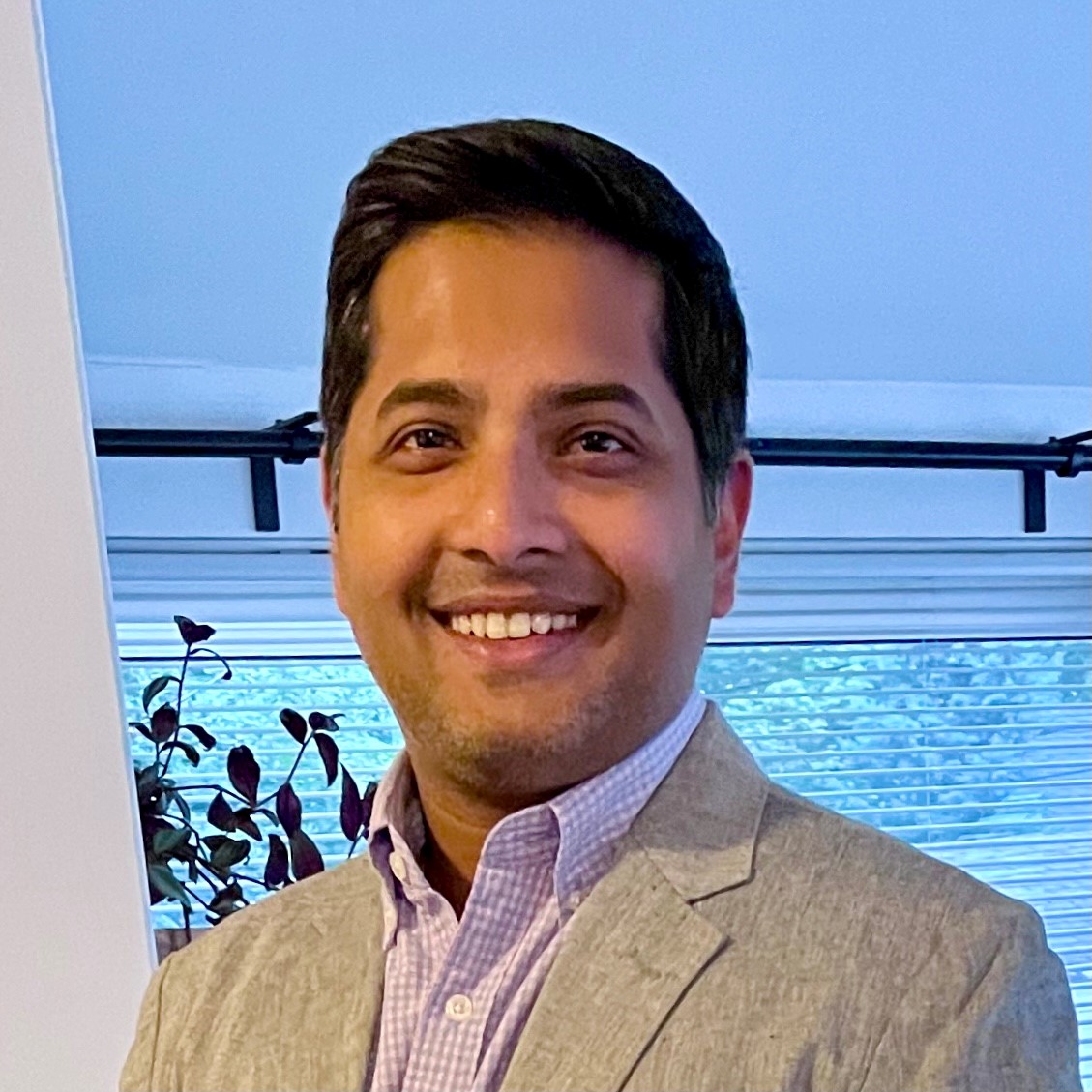
Sr. Manager, Application Marketing - Traction Inverter & Powertrain, Infineon Technologies
READ BIOInfineon Technologies
Abe is responsible for go-to-market strategy for Traction inverter and powertrain which included top-line revenue growth of all Infineon products within these applications such as Power (Si IGBT, SiC MOSFET, GaN HEMT), Microcontrollers, Gate Drivers, Power Management ICs, Current Sensors, Memory, etc. Abe has 15+ years of industry experience across the full automotive value chain at both OEM and suppliers spanning the full development cycle all the way from product development to manufacturing. Abe has been with Infineon for the last 5 years.
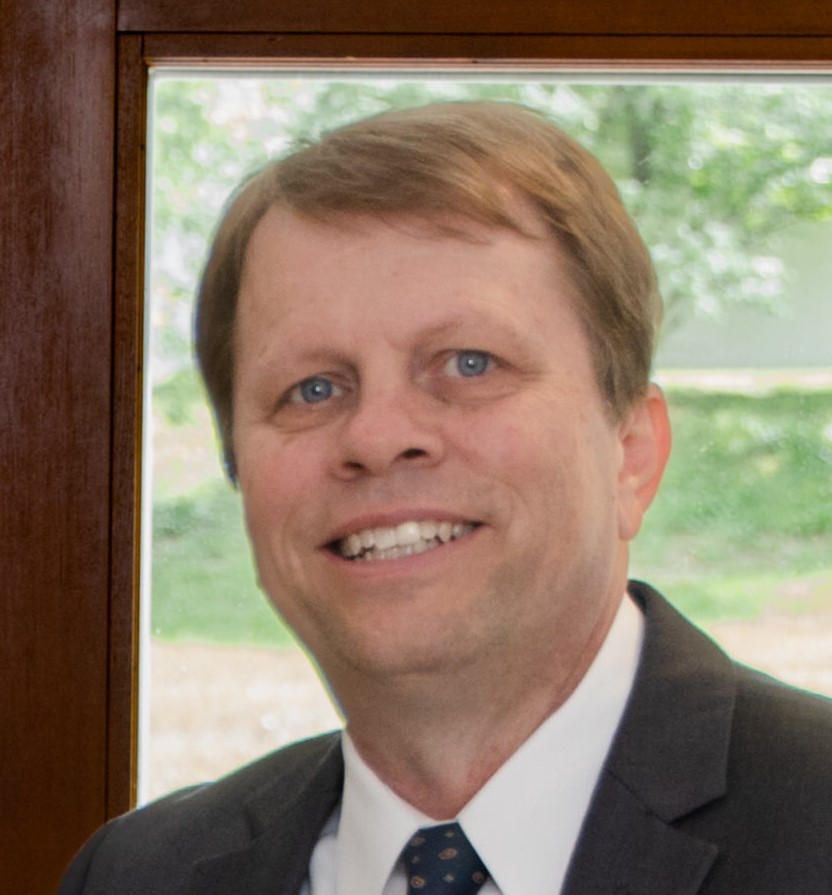
SAE - Memory Specialist, Infineon Technologies
READ BIOInfineon Technologies
Born, raised, and still live in St. Louis. Have BSAE (Aerospace Eng) from St. Louis University. Have a MSEE from Washington University in St. Louis. Spent 20 years as a design engineer at several industrial companies. 20 years ago became a Generalist FAE for Freescale covering 5 states in the midwest. In 2017, move to Cypress as a generalist FAE covering 8 states from Illinois to Utah. When Cypress was bought by Infineon, I took on this role as a PAE. Supporting our memory products across all customers across the Americas.

System application engineer - OBC, Infineon Technologies
READ BIOInfineon Technologies
Dr. Assel Zhaksylyk received her Bachelor of Science in Automation and Control from the Kazakh-British Technical University in Kazakhstan, her Masters of Science degree in Sustainable Transportation and Electric Power Systems from the University of Oviedo, Spain and her Doctor of Philosophy in Engineering Sciences with Highest Distinction from Vrije Universiteit Brussel, Belgium with her dissertation work focused on the Development Of Smart and Modular Active Front-End Systems Towards Efficient DC-Charging for Electric Vehicles. Assel worked on HV discretes for inverter applications at Infineon in Munich, Germany, and is now a Systems Application Engineer focusing on Onboard Chargers, DC/DC Converters and E-Disconnect at Infineon in Irvine, California, USA.
Principal Engineer (SAE/PAE Sensors) , Infineon Technologies
READ BIOInfineon Technologies
Brent has been in the Automotive sensor group at Infineon for 8 years working with magnetic angle, speed, linear and current sensors, as well as MEMs devices such as silicon microphone, pressure, hydrogen sensors also MEMS laser beam steering devices. Previously from Hitachi, where he was a Lead Engineer for Transmission and Engine Controllers. For 10 years prior he was with Osram Opto-Semiconductor as an AE for Interior and exterior lighting, supporting both the Automotive and Industry segments. Further in his distinguished automotive career, Brent was an Acoustics Engineer and Principal Researcher for Ashai Glass R&D, and prior to this a Controls & Displays Design Release Engineer (DRE) for GM Cadillac.
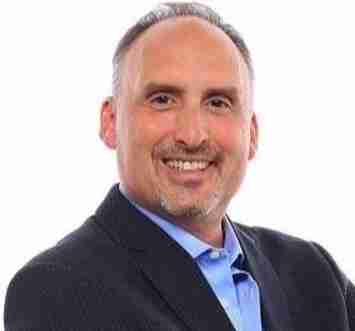
Senior Principal Systems Architect, Infineon Technologies
READ BIOInfineon Technologies
Brian has a long history working within the automotive industry. He worked in various roles at an OEM and T1’s and now with Infineon for the past 5yrs. He is a seasoned automotive embedded SW/MCU expert and automotive EE systems architect with several products successfully launched into large-scale production in the automotive industry. Over the past decade, he has been involved with many new mobility strategy initiatives and has led several projects addressing new mobility trends including UX, ADAS, scalable AI, smart mobility, connected services and SDV architectures. In addition to his technical work, Brian has also been involved with various business related topics including trend analysis research and tech scouting, partnership management, business model creation along with several M&A topics.

TASKING, Lead Application Engineer
READ BIOLead Application Engineer
Celeste Breyer is a Lead Application Engineer at TASKING, where she has spent nearly a decade in the trenches of security- and safety-critical embedded systems, becoming a go-to voice for the automotive industry on doing things the right way. A Texas A&M-trained aerospace engineer, she brings a rocket scientist's rigor to the world of embedded software, championing best-practice development and standards compliance long before they become someone else's expensive lesson. She's also a prolific industry writer, with numerous publications on embedded systems cybersecurity to her name — making her as comfortable behind a keyboard as she is on stage.
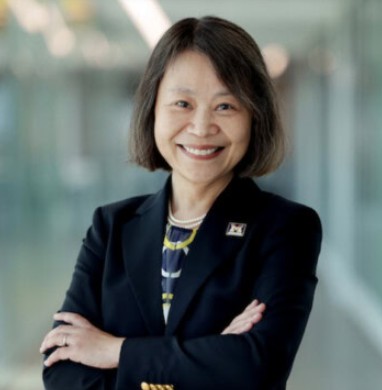
Robert J. Vlasic Dean of Engineering , The University of Michigan
READ BIOThe University of Michigan
Mingyan Liu has served as the Robert J. Vlasic Dean of Engineering at the University of Michigan since May 15, 2026. She is the seventeenth dean of the University of Michigan College of Engineering.
Liu is also T. C. Chang Professor of Engineering and professor of electrical engineering and computer science at the University of Michigan.
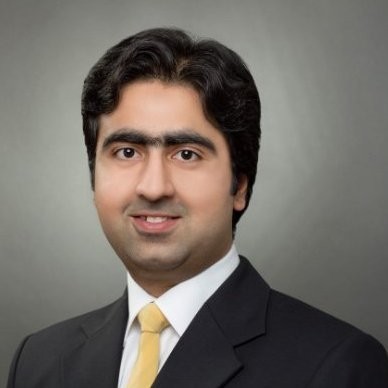
Lead Principal Radar Systems, Infineon Technologies
READ BIOInfineon Technologies
Farhan Bin Khalid is an ADAS and Radar Systems Expert and has been working at Infineon Technlogies AG since 2015. Previously he has been at the team of Automotive Systems. Since 2025, he has been at Systems Team at Technical Marketing, Radar Product Line. The work focuses on advanced signal processing & algorithms, system design, system architecture, and embedded software in the domain of automotive radar systems for advanced driver assistance systems (ADAS) and highly automated driving.

Lead Principal Application Engineer, Infineon Technologies
READ BIOInfineon Technologies
Frank Aiello is a Lead Principal Application Engineer in the Automotive Vehicle User Experience application segment at Infineon, located in the Detroit area. Frank joined Infineon in 2006, and has over 38 years of experience in automotive and embedded systems applications in OEM, Tier1 and semiconductor supplier roles. At Infineon, his current focus is on power electronics and motor control for robotics applications.
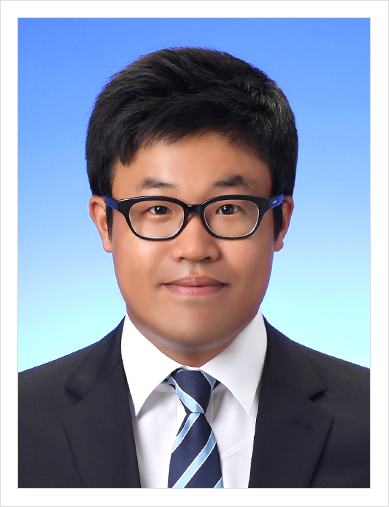
Principal System Application Engineer, Infineon Technologies
READ BIOInfineon Technologies
Jaeeun Cha has 10 years of experience in Automotive Power Electronics over a wide range of applications. He worked for Hyundai & KIA Motor Company for about 7 years as a research engineer designing OBC, Wireless Power Transfer System, and Traction Inverter Power Module. In 2023, he joined Infineon Technologies as a Product Definition Engineer for GaN & SiC Automotive Power MOSFET in Austria. Currently, he is working as a Systems Application Engineer for traction Inverter in the US. He received the M.Sc. degree with Distinction of Control Systems in Electrical & Electronics Engineering from the Imperial College London, UK, in 2015.
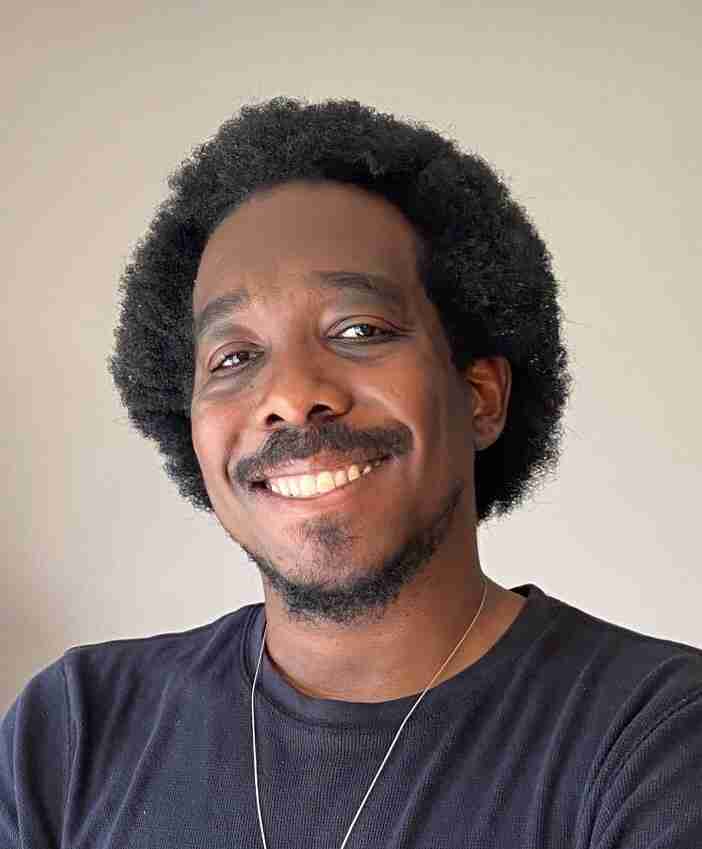
Staff System Application Engineer, Infineon Technologies
READ BIOInfineon Technologies
James Baker is a Systems Applications engineer, with ten years of experience working in the automotive industry. James ignited his passion for engineering as a competitor in FIRST Robotics. Going on to earn his bachelors in electrical engineering from Purdue University. James finds joy in writing, reading, and drawing for the world’s greatest game of Dungeons and Dragons.
Application Manager ADAS domain and 77GHz RADAR Marketing, Infineon Technologies
READ BIOInfineon Technologies
Jeff is a sales, engineering, and product management professional with over 30 years’ experience in automotive electronics and thermal management systems. Jeff has worked in automotive systems and product design and held sales and product management positions throughout his career. Currently, Jeff leads Infineon’s application marketing for ADAS / Autonomous driving and 77GHz Radar applications in the Americas.
Systems Applications Engineer, Infineon Technologies
READ BIOInfineon Technologies
I started my career in the Power Industry supporting main turbine generator excitation equipment and developing electronic instrumentation and control equipment. After 10 years, I migrated to the Automotive Industry and worked for a major Tier 1 supplier developing hardware and software for airbag crash sensing systems. After 20 years, I moved into the semiconductor industry and supported customers with ICE and xEV Powertrain applications.

Director, Automotive GaN Business Development, Infineon Technologies
READ BIOInfineon Technologies
Julian has been working with innovative technologies for over 25 years. He helped develop the technology behind digital cellphones, digital audio broadcast, on-board fast charging for EVs, and grid stability management using EV chargers; and his teams were among the first to integrate personal digital devices, heads-up displays, MP3s and proximity sensing into vehicle interiors. He was the first USA employee of GaN Systems, where he was responsible for introducing the company’s advanced gallium nitride power semiconductors to the US market. Since Infineon’s acquisition of GaN Systems, Julian has focused on the rollout of GaN technology in the automotive sector.

Lead Principal Engineer, Infineon Technologies
READ BIOInfineon Technologies
Keith comes to Infineon with a strong working knowledge of analog silicon solutions applied to engine management, crash sensing, body, chassis and braking applications as well as serial data communications and power devices. He’s developed extensive experience in the development of mixed-signal integrated circuits including switching converters, linear regulators, linear solenoid drivers, intelligent output drivers, gate drivers and more. Keith spent the past 13+ years at Renesas Electronics, where he was Senior Manager leading technical marketing and applications engineering activities developing and promoting analog IC and power semiconductor products. He served on global teams to drive mixed-signal and power device business development. Keith began his career at GM’s Delco Electronics in Kokomo Indiana. There, he worked as a test engineer in high-volume powertrain ECU manufacturing. He then spent several years specifying, developing and evaluating custom mixed-signal ASICS for most automotive segments. Keith has a Bachelor of Science degree in Electrical Technology from Purdue University in West Lafayette, IN and Master of Engineering degree from Cornell University in Ithaca, NY. His studies emphasized analog and digital control systems, circuit design and computer architecture. Keith is married to Michelle, his wife of 31 years and live in Greentown, IN. They have two children. Austin, 24, is a Biological Engineering graduate from Purdue University in West Lafayette, IN and is employed as an associate scientist at PPD in Madison, WI. Andrea, 22, is a recent nursing graduate from Cedarville University in Cedarville, OH. She will start her career in a Newborn ICU at Nationwide Children’s Hospital in Columbus, OH. Keith enjoys running, is an avid music fan, woodworker and handyman/home improvement enthusiast. He’s an active lay leader at church, sings and has dabbled in the theatrical arts.
System Architect, Infineon Technologies
READ BIOInfineon Technologies
Markus Moesenbacher is a System Architect for Digital Security and Identity at Infineon Technologies. He is responsible for driving the strategic definition of chip hardware and software solutions. Markus Moesenbacher holds a master’s degree in electrical engineering from the University of Graz, Austria and an Executive MBA from the California Lutheran University. He has more than 20 years of experience in the Smart Card and security business.
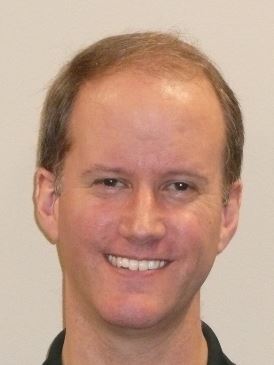
Senior Principal ADAS/AURIX Engineer, Infineon Technologies
READ BIOInfineon Technologies
Neal has decades of Tier 1 and OEM experience in Automotive Engineering. Neal has supported Infineon's AURIX microcontrollers since 2013, specializing in Functional Safety and Embedded Software.
Sr. Application Marketing Manager, Infineon Technologies
READ BIOInfineon Technologies
Oscar brings over 20 years of extensive automotive industry experience, having progressed through various roles at Infineon, including Systems and Applications Engineer, Field Applications Engineer, and Sales. Currently, he serves as an Application Marketing Manager for several applications in automotive and most recently, he has embarked in the exciting world of Humanoid Robotics.

Lead Principal System Application Engineer, Infineon Technologies
READ BIOInfineon Technologies
Peter Luniewski is a Lead Principal System Application Engineer at Infineon Technologies Americas Corp. He holds an M.Sc. in Power Electronics from the Technical University of Warsaw and has been with Infineon since 2004. Peter has over 20 years of experience in power electronics, specializing in power conversion systems, inverters, and semiconductor applications.
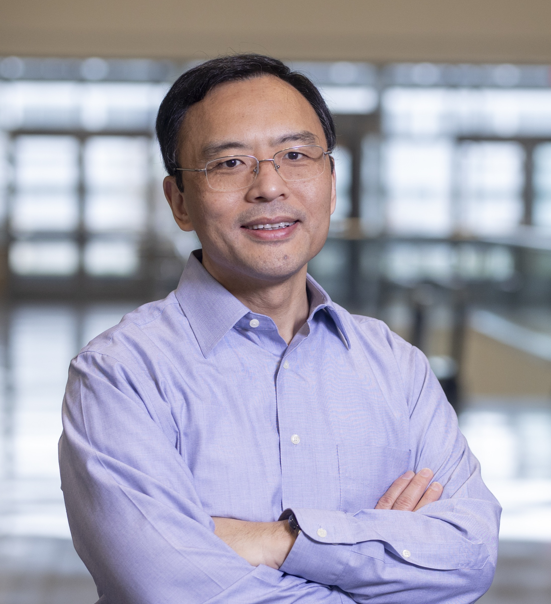
James R. Mellor Professor of Engineering at The University of Michigan, and Co-founder of MemryX Inc. and Crossbar Inc.
READ BIOand Co-founder of MemryX Inc. and Crossbar Inc.
Professor Wei Lu is the James R. Mellor Professor of Engineering, and Professor in Electrical Engineering and Computer Science at the University of Michigan. His research interest includes memory technologies such as 3D memories and RRAM/memristors, memory-centric computing architectures such as in-memory computing and neuromorphic computing systems, and physics- and biology-inspired AI models. He received his B.S. degree in 1996 from Tsinghua University and Ph.D. degree in 2003 from Rice University, followed by a postdoctoral research fellow position from 2003 to 2005 at Harvard University. He joined UM's faculty in 2005.
He is an IEEE Fellow, an AAAS Fellow, a recipient of the NSF CAREER Award, 2012 EECS Outstanding Achievement Award, 2014-15 Rexford E. Hall Innovation Excellence Award, 2016-2017 David E. Liddle Research Excellent Award, 2022 Distinguished University Innovator Award, and the 2022-23 Ted Kennedy Family Faculty Team Excellence Award. To date he has published over 200 journal and conference papers with over 50,000 citations and h-index of 95 (Google Scholar ). He is the founding Editor-in-Chief of npj Unconventional Computing. Beyond academic research, Prof. Lu holds 35 US patents and co-founded two startup companies, Crossbar Inc, a Silicon Valley semiconductor company developing next generation non-volatile memories, and MemryX Inc., an Ann Arbor-based semiconductor company developing highly efficient and scalable AI chips.

Senior Marketing Manager, Infineon Technologies
READ BIOInfineon Technologies
Rob Pizzuti has a BSEE from Michigan State University and a MS in Engineering Management from Oakland University. Rob has 30+ years in the automotive and semiconductor industry and has been with Infineon for 21 years where he has supported Chassis application, Consumer products, Industrial and automotive lighting and Automotive Body and Power distribution applications. Prior to Infineon Rob held engineering and engineering management positions at Valeo, Alps Automotive, and Code Alarm where he developed body electronics including electronic, electromechanical and RF products for US and Japanese OEMs as well as aftermarket customers.
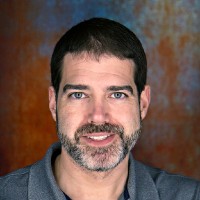
System Applications Engineer, Infineon Technologies
READ BIOInfineon Technologies
Scott is a computer engineer whose career spans both defense and automotive technology. He spent the first 10 years of his career developing control and processing solutions for imaging radar and electro-optical sensor systems in defense applications before moving into the automotive semiconductor industry. Over the past 15 years, he has specialized in embedded software, microcontrollers, and system integration, with a recent focus on battery management systems and electrified vehicle technologies. Having supported customers across nearly every major automotive domain—including body electronics, networking, dashboards and instrument clusters, chassis, powertrain, and EV systems—he brings a cross-functional perspective on the technologies and design decisions shaping modern vehicles.

Worldwide Head, Emerging Technologies, Auto & Mfg, Amazon Web Services, Inc.
READ BIOAmazon Web Services, Inc.
Stefano Marzani is the Worldwide Leader for Emerging Technologies in Automotive and Manufacturing at Amazon Web Services, focused on the 2025–2028 technology horizon where software-defined vehicles, embedded virtualization, and agentic AI converge. His work centers on closing the gap between cloud-native development environments and physical vehicle validation — helping OEMs, silicon vendors, and toolchain providers shift testing left without sacrificing fidelity. He has partnered with organizations including Stellantis, Honda, Schaeffler, and BMW on virtual engineering workbench architectures and cloud-based HiL strategies. His current focus is on pushing the ecosystem beyond isolated tool integrations toward genuinely agentic engineering workflows — where AI doesn't just assist developers but orchestrates the connections between tools, targets, and teams. He's a governing body member of SOAFEE, host of AWS's "All Things Automotive" video series, and was recognized as "Software-Defined Vehicle Innovator" by MotorTrend at CES 2024.

Application Marketing Manager Zone Controllers, Power Distribution, & 48V DC/DC, Infineon Technologies
READ BIOInfineon Technologies
Stefano (Steve) Spadoni has a Bachelor of Science in Mechanical Engineering Degree - with a focus on Thermal Sciences - from Lawrence Technological University, Southfield, USA. He received his Master of Business Administration degree from University of Michigan in 2005. Upon completing his engineering studies, Stefano joined Alcoa Fujikura Limited as Product Engineer, responsible for the design of connectors and hard-wired electrical centers. Here he designed hybrid connectors and hard-wired electrical centers. This led to him designing electrical centers with stamped metal circuits and then printed circuit board designs. In 2006, Stefano transitioned to an engineering management position with Ford Motor Company working in the Electrical & Electronic System Engineering division and was involved with migration from electromechanical relays and fuse to solid state. He worked there for over 15 years, starting with power switching and circuit protection in an interior application then migrating the technology to exterior engine applications with higher temperatures and harsher environments. During Stefano’s tenure at Ford, he also led the research and advanced development of electrical distribution systems technologies focusing on the reduction of wire harness assembly costs. Over his 30+ year career, he has developed an understanding of global OEM’s needs and the feasibility of delivering from a supplier’s perspective. He is also at the forefront of the transition of emerging technologies, market trends and their impact on electrical distribution systems.
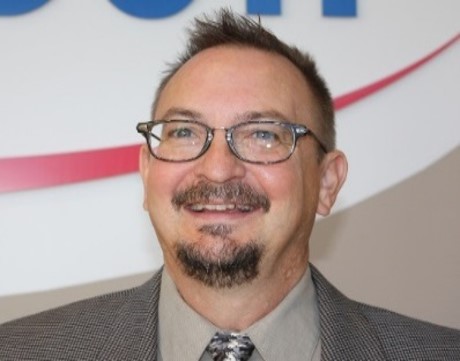
Lead Principal System Application Engineer, Infineon Technologies
READ BIOInfineon Technologies
Steve Gross is a Lead Principal System Application Engineer with Infineon Technologies Americas. He joined Infineon in 2011 and has held a variety of application engineering and marketing roles here. He earned BSEE, MSEE, and MBA degrees all from Michigan State University—Go Green! He is also a TÜV-certified Functional Safety Expert, and has helped multiple automotive OEMs and Tier 1 companies develop ISO26262-compliant systems.

System Architect, Infineon Technologies
READ BIOInfineon Technologies
TJ Houck is a System Architect at Infineon Technologies, specializing in automotive high-speed connectivity, Ethernet, and SERDES architectures. He has extensive experience defining camera and sensor connectivity solutions, including foundational work on GMSL products. TJ is an active contributor to IEEE 802.3dm, helping advance asymmetric multi-gigabit Ethernet for automotive applications. His work currently focuses on gathering system requirements and translating them into practical, scalable semiconductor and network architectures.

Sr. Product Marketing Manager, Infineon Technologies
READ BIOInfineon Technologies
Ujjwal Karki is a Senior Product Marketing Manager for Automotive Sensors at Infineon Technologies, where he drives product strategy and business growth for sensor solutions across a broad range of automotive applications. He holds a Ph.D. in Electrical Engineering from Michigan State University and has over 15 years of experience in power semiconductors, high-voltage power electronics, and automotive sensing technologies.
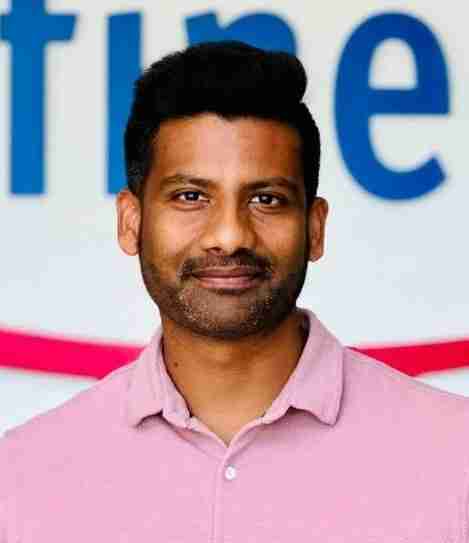
Principal Engineer, Infineon Technologies
READ BIOInfineon Technologies
With over 13 years of experience in analog and mixed-signal electronic circuit design, I specialize in bridging the gap between board-level hardware development and integrated circuit (IC) design. Currently serving as a Systems Application Engineer at Infineon Technologies, I leverage my background in automotive ECUs, power electronics, and functional safety to deliver robust, compliant, and efficient hardware solutions.
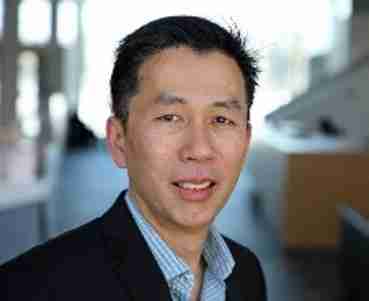
Director, Applications Engineering, Infineon Technologies
READ BIOInfineon Technologies
Wibawa Chou is a regional director of automotive application marketing for vehicle electrification located at Infineon office in El Segundo, CA. He has more than twenty years of experience in power electronic design and application. He was previously with Infineon high reliability business line as a director of technical marketing for radiation hardened power devices and integrated circuits.
Prior to Infineon, Wibawa worked at Emerson Electric as a power supply principal design engineer and held an M.Sc. degree in Electrical Engineering from Ohio State University in Columbus, OH.
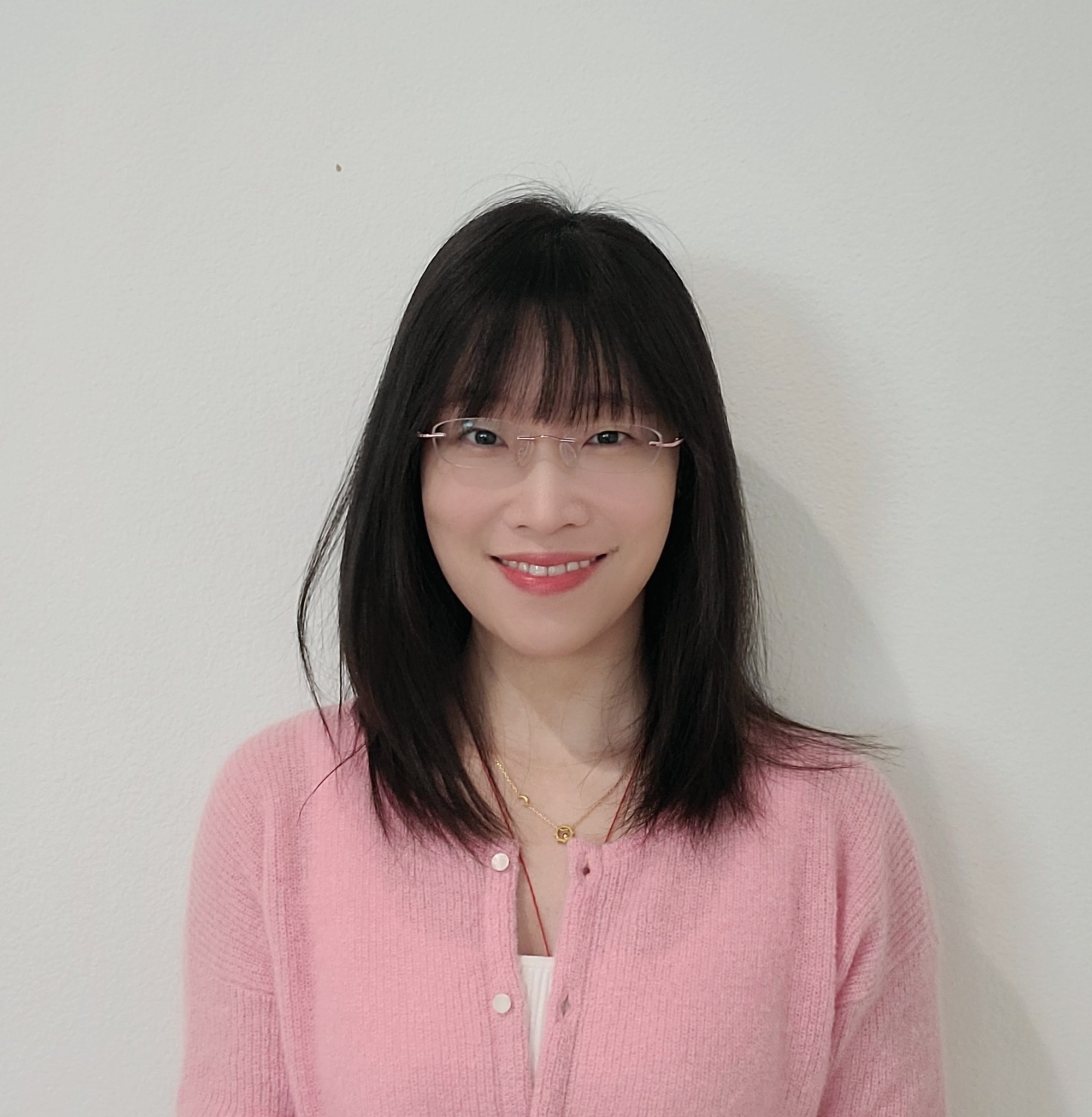
System application engineer, Infineon Technologies
READ BIOInfineon Technologies
Yang Xue joined Infineon in 2022 as a System Application Engineer for Wide Bandgap devices and High Voltage Gate Drivers. Prior to that, she worked for SemiQ on performance evaluation and gate driver reference design for SiC MOSFET and power modules. She graduated from the University of Tennessee, Knoxville with a Master’s degree in power electronics in 2013. She also worked for Philips as a power electronics engineer
Yes, this event is completely free to attend.
All of the presentations from the technical training will be available following the live event. Check back on this site for the download links.
Our event is split between two locations, Schoolcraft College for the training and German Park for the evening event. Get more details on the "Venues" tab at the top of this page.
Yes! When you register, please add your guest's name to your registration or have your guest register for the event separately.
All attendees, including guests, must be 21 years or older to attend the customer appreciation event in the evening. We will be checking IDs at the entrance.

2025 Technical Presentations Still Available for Download
Log in to MyInfineon or register today to download presentations and get more relevant training content.
Venues
Technical training
The Technical Training will be held at the Vistatech Center - Schoolcraft College (18600 Haggerty Rd., Livonia, MI 48152).
We recommend you park in the Northwest Parking Lot.
Directions:
Evening reception
The customer appreciation reception will be held at German Park in Ann Arbor, MI.
Address: 5549 Pontiac Trl., Ann Arbor, MI 48105.
Directions
German Park is about 3 miles northeast of Ann Arbor. The easiest route is to take Huron Parkway north or Plymouth Road east to Nixon Road. Take Nixon Road north until it ends at Pontiac Trail. Take a right on Pontiac Trail towards South Lyon, and continue for about one mile. German Park is about 3 miles northeast of Ann Arbor. The easiest route is to take Huron Parkway north or Plymouth Road east to Nixon Road. Take Nixon Road north until it ends at Pontiac Trail. Take a right on Pontiac Trail towards South Lyon, and continue for about one mile.
We recommend wearing sensible shoes as the venue is outside.
Parking
German Park provides free parking for our guests.
In order to ensure the safety of German Park volunteers and all our guests. Please observe the following rules in the parking lots: